
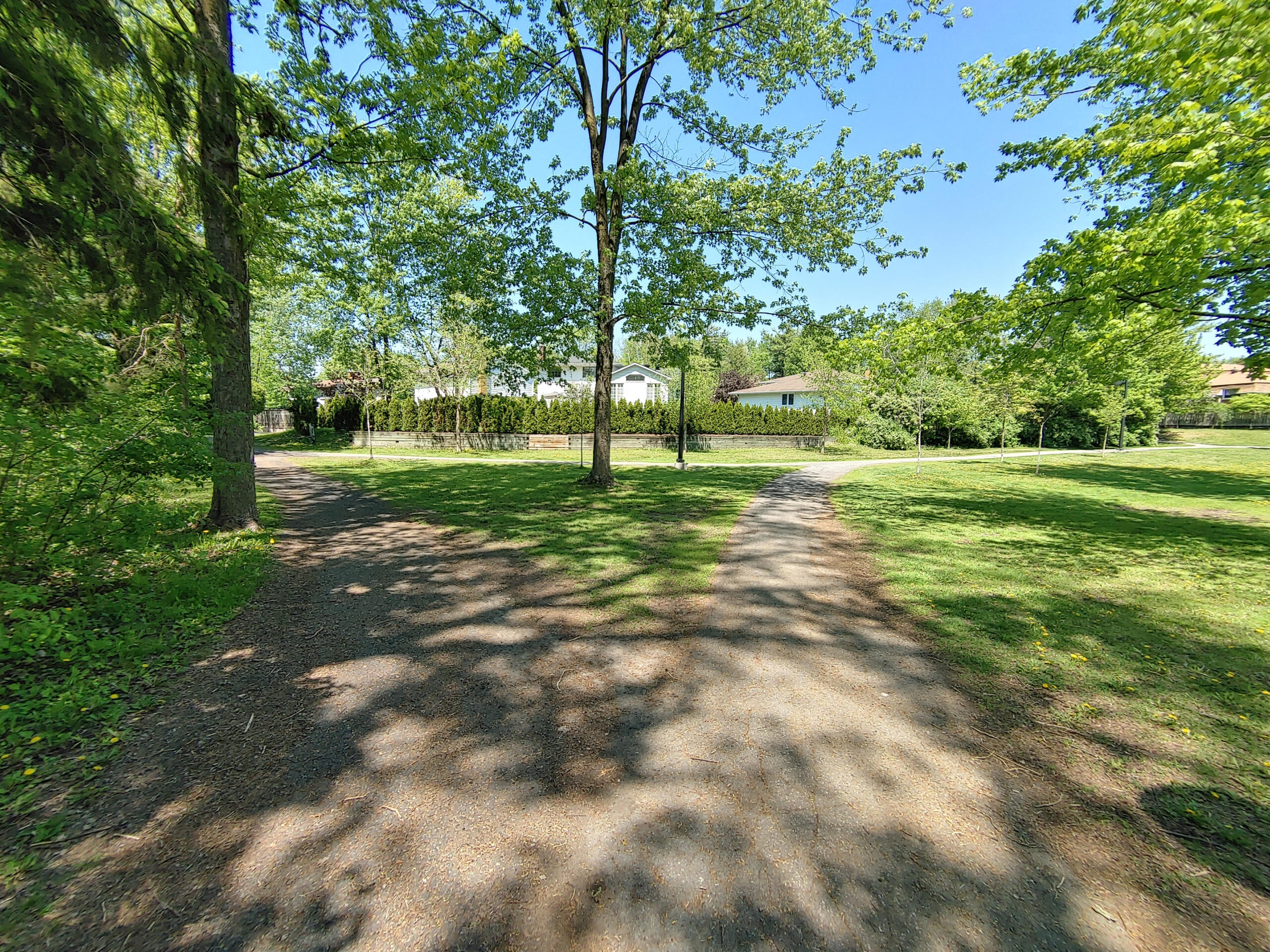
The Harold Diceman Park Interpretive Experience
Respectfully, we begin by acknowledging that we are in the ancestral and unceded Traditional Territory of the Algonquin People. We recognize the Algonquins as the stewards of these lands and resources – in the past, in the present and in the future.
Audio Tour
The Harold Diceman Park Interpretive Experience follows the trail through this park. We explore the natural features we see around us and look beyond the park we see today to learn about the history of Blackburn Hamlet.
This Experience is currently available in English in either a single-page, foldable brochure (PDF) format or a more detailed audio version. The audio version of this Experience can either be played directly from this webpage or downloaded (MP3 and M4A formats) and listened to while you travel the trail.
1. Introduction
[one_half]
Have you wondered about the name of this park or others in Blackburn Hamlet? When Harold and Yvonne Diceman moved to Blackburn in the 1950s, they lived on the street behind you (Ridgeburn Gate). The Dicemans, Allan Beddoe and a handful of landowners, with the help of Dolphin Homes (later Costain Homes), convinced the National Capital Commission not to expropriate their lands leaving a 650 acre island in the Greenbelt. Their vision would become Blackburn Hamlet as we know it today.
[/one_half]
[one_half_last]
[/one_half_last]
2. Geology
[one_half]
Just 21,000 years ago this area was covered by the Laurentide Ice Sheet. The weight of this two-kilometer layer of ice depressed the land, allowing the Atlantic ocean to flow in as it melted, and forming the Champlain Sea. The marine sediments deposited in the Champlain Sea form the Leda clay that lies underfoot. It can also be seen along the banks of Green’s Creek, where it can reach a depth of 20 meters.
[/one_half]
[one_half_last]
[/one_half_last]
3. Cottonwoods
[one_half]
Before Blackburn Hamlet was established in 1967, this part of the park was forested. Remnants of this forest can still be seen today. To your left, the largest six trees with deeply furrowed bark are Eastern cottonwoods, North America’s largest hardwood in the willow family. The largest cottonwood here (located at the back near the play structure) has a diameter of 105 centimeters and an estimated age of 80 years!
[/one_half]
[one_half_last]
[/one_half_last]
4. Yellow-bellied Sapsucker
[one_half]
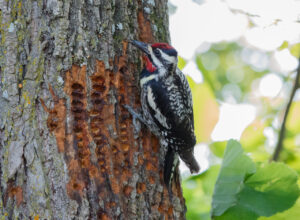
To your left you will notice a young pine tree with a series of holes in the bark. These are the distinctive marks of the yellow-bellied sapsucker, a bird in the woodpecker family. It pecks horizontal rows of regularly spaced, oval to squarish holes through bark feeding on sap and sapwood which accounts for fifty percent of its diet. This is just one indication of the biodiversity present in our community, and a reminder that sometimes we need to look closely to see it. Photo courtesy of Jakob Mueller.
[/one_half]
[one_half_last]
 [/one_half_last]
5. Trails that connect our community
[one_half]
Anyone familiar with Blackburn Hamlet today will tell you that the most distinctive feature of our community is the network of trails and parks that connect the community. At the time Costain Homes was developing this community in the mid 1960s, it allocated seven percent of the land it was developing to parks. In contrast, the City of Ottawa currently allocates five percent in low density areas such as rural development. Had Blackburn Hamlet been conceived and established today, it is likely that the community would have looked a lot different, with less parks and trails.
[/one_half]
[one_half_last]
[/one_half_last]
6. Eastern White Cedars
[one_half]
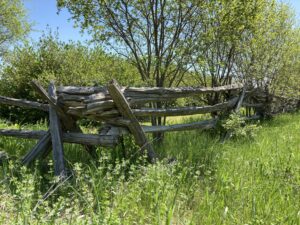
At the start of this trail and again here, you can see the many cedars that, in the absence of regular pruning, are maturing into trees. The Eastern White Cedar is native to eastern Canada and often used for hedging. Its wood, which is light, rot resistant and easy to work, makes it an ideal building material for canoes and shelters alike. This was also an advantage for making split-rail fences that still surround farm fields in Eastern Ontario.
[/one_half]
[one_half_last]
 [/one_half_last]
7. The Journey Onward
[one_half]
Looking back over the trail, we can see the way this landscape has changed over time and the events that led to the Blackburn Hamlet we know today. We can also see other hidden features, like the origins of the soils that support the nature around us and the ways that this nature embraces our community in its unique location within Ottawa’s Greenbelt.
[/one_half]
[one_half_last]
[/one_half_last]
8. Acknowledgements
[one_half]
The audio version of this tour was written and produced by Sarah Morgan-White and Susan Aitken with contributions by Christopher Brett and read by the following community members: Mark Lister, Nina Ryan, Katrya Bolger, Joe Bolger, Supattana Bolger, Valerie Plechenko, Brad Hampson and Sarah Morgan-White.
[/one_half]
[one_half_last]
[/one_half_last]
[wptabs id=”1625″]